


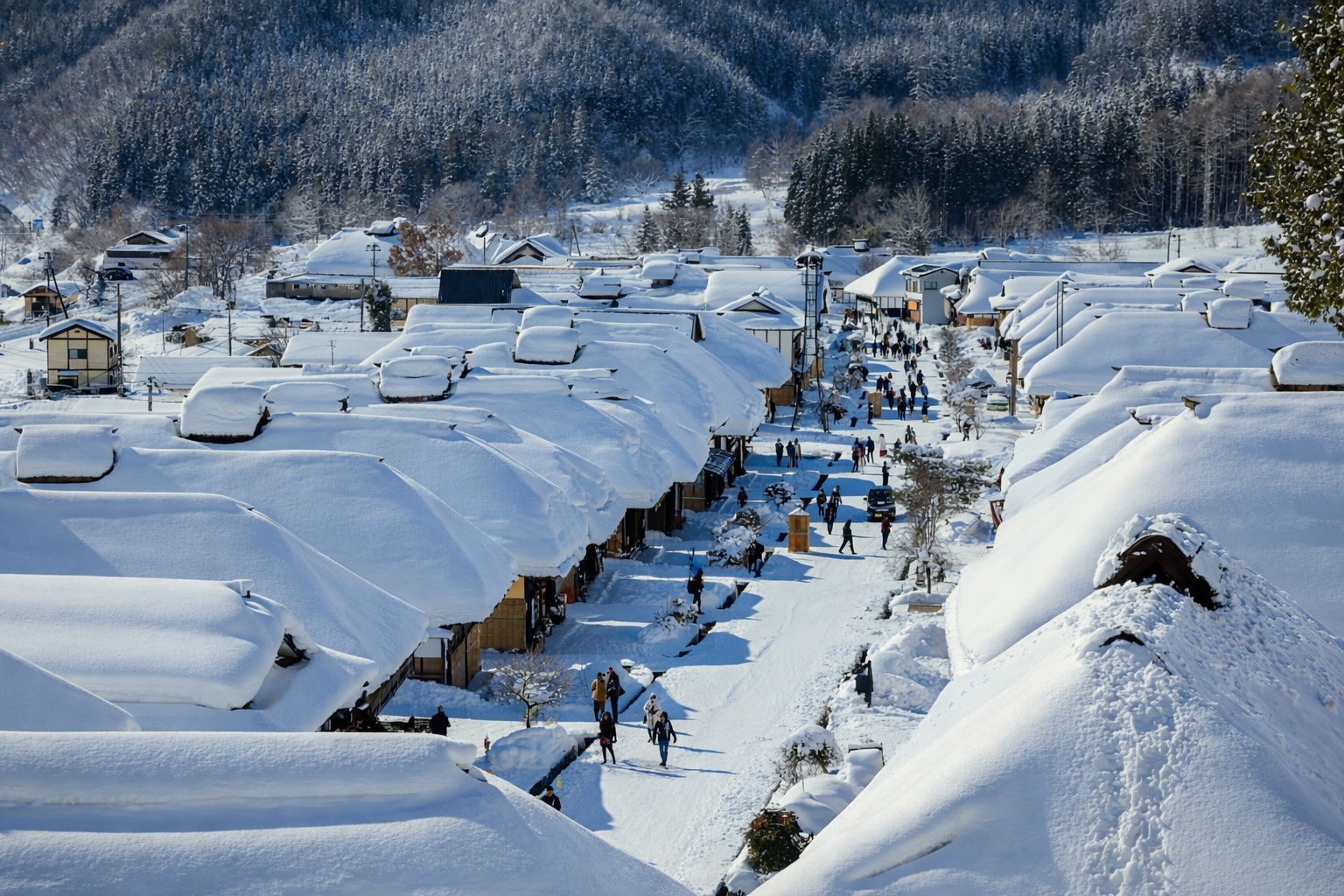
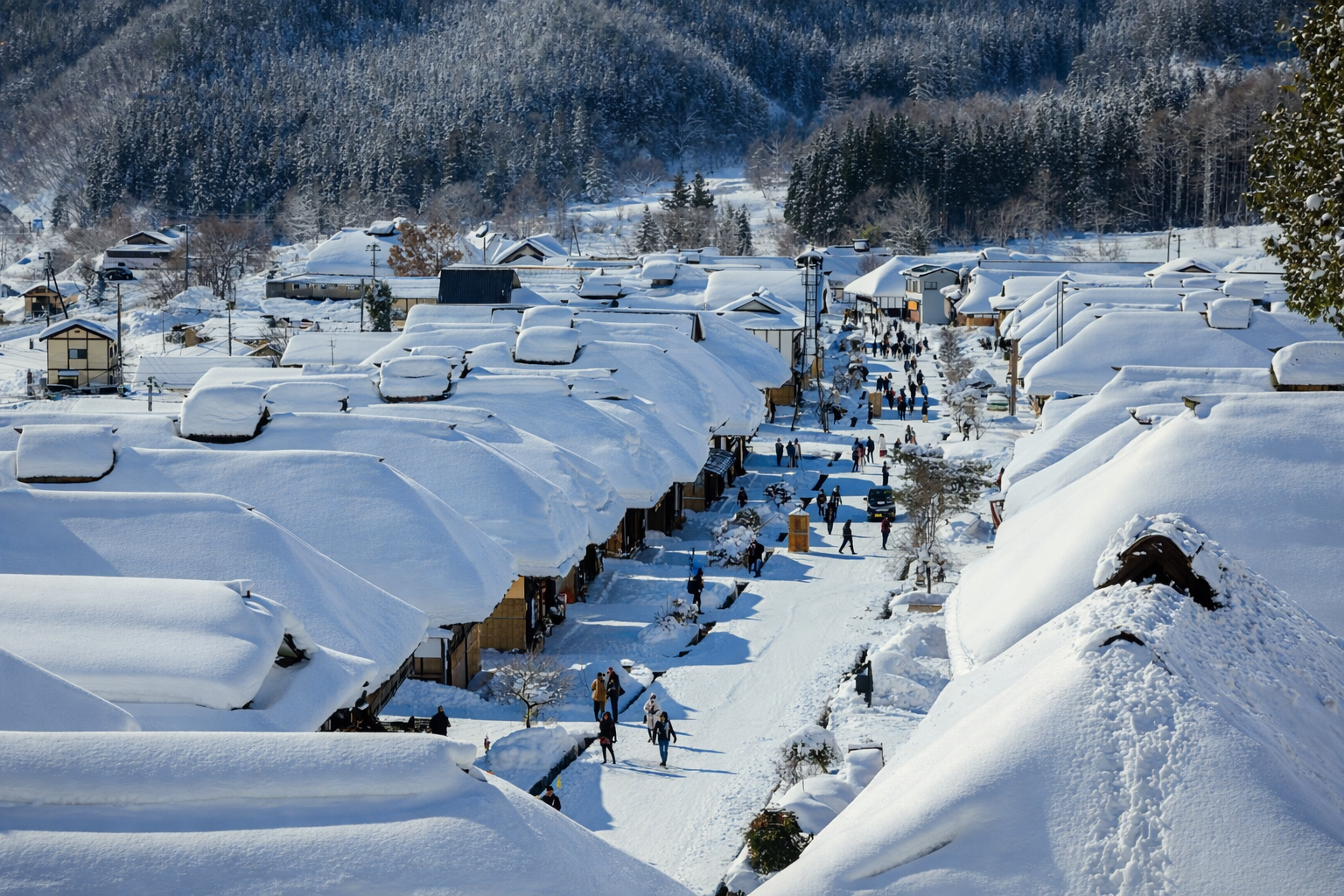
Ouchijuku is a historic village located in Shimogo Town, Fukushima Prefecture, Japan. Established during the Edo period (17th century), it once served as an important post station on the Aizu Nishi Kaido route connecting the Aizu region with the Nikko area. Today, Ouchijuku has been preserved almost intact and is considered one of the representative cultural and historical destinations in the Tohoku region.
The most recognizable feature of Ouchijuku is its traditional thatched-roof houses (kayabuki). Built with wooden frames and thick straw roofs, the houses line both sides of the village’s main road. This architectural style suits the cold, snowy climate, helping retain heat in winter while remaining ventilated in summer.
 Time:
Time:  Depart:
  Vehicle:
 Winter is the peak visiting season in Ouchijuku. Heavy snowfall covers the entire village, creating a landscape typical of northern Japan’s mountain regions. Snow blankets the roofs while smoke rises from indoor charcoal hearths, reflecting the traditional lifestyle still maintained by residents.
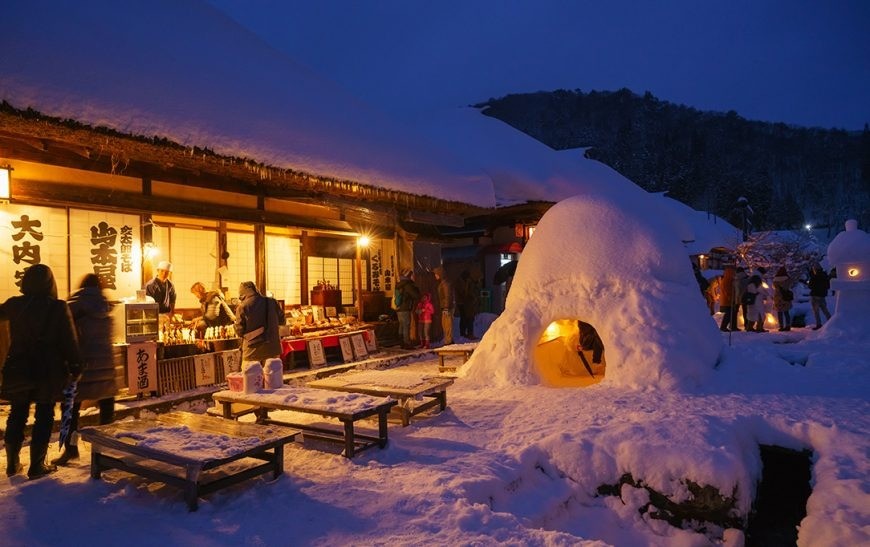
In the evening, when lanterns and lights are turned on, the village becomes quiet and highlights its historic architectural character. During the winter festival period, certain areas are illuminated for sightseeing and photography.
Local cuisine
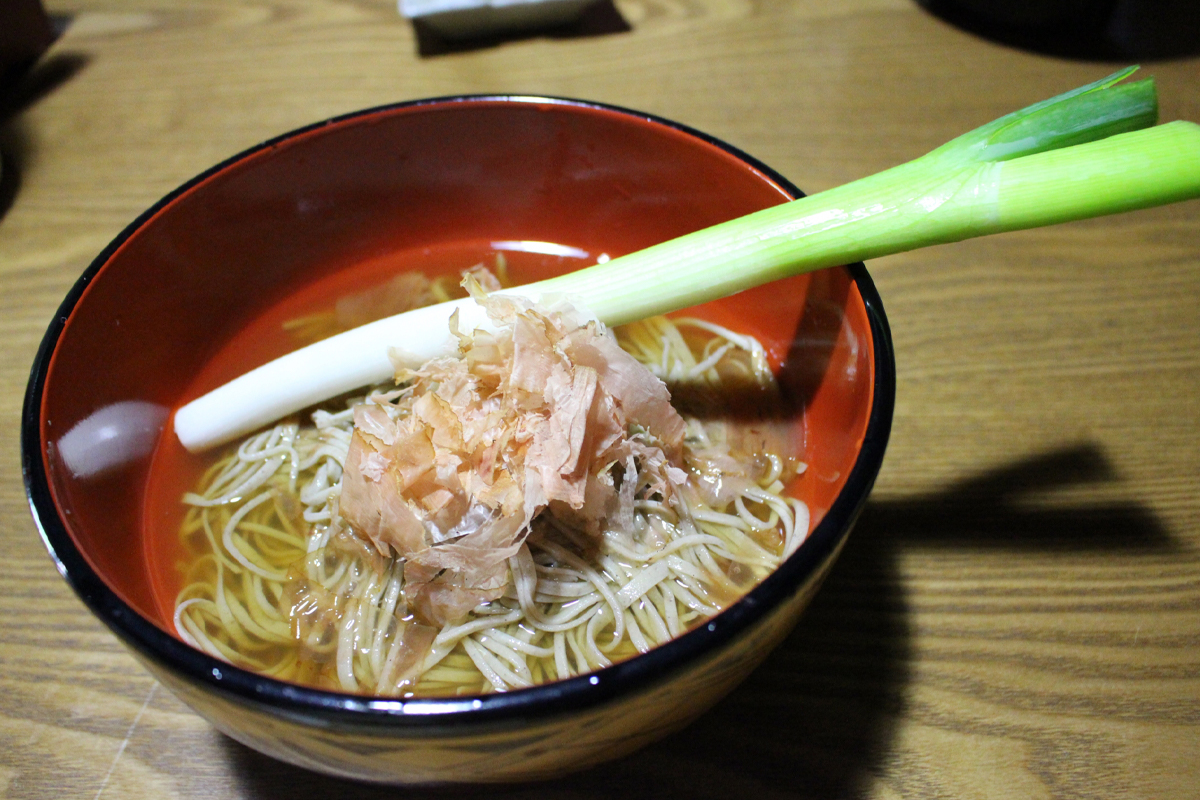
A signature experience in Ouchijuku is Negi Soba, buckwheat noodles served with a long green onion used instead of chopsticks. The dish is tied to local customs and has become a specialty strongly associated with the village.
Restaurants in the area also serve grilled rice cakes, charcoal-grilled river fish, and other mountain-style dishes typical of Fukushima cuisine.
Preservation value
Ouchijuku is designated as an Important Preservation District for Traditional Buildings in Japan. Construction and renovation in the village are strictly regulated in materials and design to maintain its historical appearance. As a result, the village retains the layout of an Edo-period post town, including its road, shops, and residential houses.
Today, Ouchijuku functions not only as a winter sightseeing destination but also as a place to learn about traditional rural life, architecture, and cultural heritage in Japan’s past.


Tour information
Ouchijuku Historic Village – A Traditional Snow Village in Fukushima, Japan


Sign up for consultation
Contact us
PBJP TRADING & TOURISM SERVICES COMPANY LIMITED
- Address:Office 26, 26th Floor, Song Da Building, No. 110 Tran Phu Street, Ha Dong, Hanoi
- Phone : +84 393 250 295
- Website : pbjptravel.com
Connect with PBJP TRAVEL